

Topic: Steppers not moving in any direction on Ramps 1.4
Hi everyone,
I'm currently having a little trouble with getting my ramps 1.4 to work.
I've hooked everything up temporarily and everything seems to function aside for my steppers motors just
can't seem to move them in any direction.
Any help would be greatly appreciated
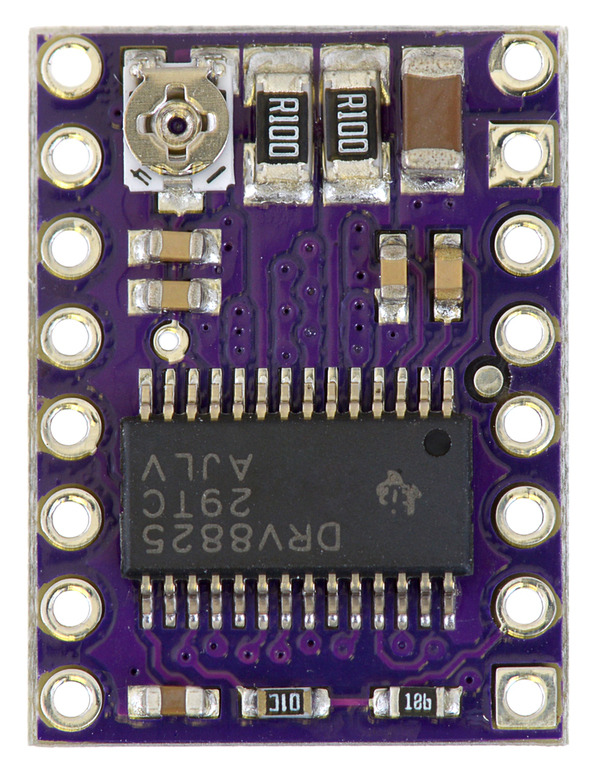
ps I had disconnected the z stepper at the time of the picture of course with the power off
it is now plugged in.
here's my code in marlin
#ifndef CONFIGURATION_H
#define CONFIGURATION_H

// This configuration file contains the basic settings.
// Advanced settings can be found in Configuration_adv.h
// BASIC SETTINGS: select your board type, temperature sensor type, axis scaling, and endstop configuration

//===========================================================================
//============================= DELTA Printer ===============================
//===========================================================================
// For a Delta printer rplace the configuration files wilth the files in the
// example_configurations/delta directory.
//

// User-specified version info of this build to display in [Pronterface, etc] terminal window during
// startup. Implementation of an idea by Prof Braino to inform user that any changes made to this
// build by the user have been successfully uploaded into firmware.
#define STRING_VERSION_CONFIG_H __DATE__ " " __TIME__ // build date and time
#define STRING_CONFIG_H_AUTHOR "Adrian/Lawsy/Rincewind/Tealvince" // Who made the changes.

// change to 3 for SD3 //{SD Patch}
#define SOLIDOODLE_VERSION 3 //{SD Patch}

// Enable support for either of the Z-Wobble Solutions
//#define ZWOBBLE_PATCH //{SD Patch} (+5528 Bytes)
//#define HYSTERESIS_PATCH //{SD Patch}(+1592 Bytes)

// SERIAL_PORT selects which serial port should be used for communication with the host.
// This allows the connection of wireless adapters (for instance) to non-default port pins.
// Serial port 0 is still used by the Arduino bootloader regardless of this setting.
#define SERIAL_PORT 0

// This determines the communication speed of the printer
#define BAUDRATE 250000
//#define BAUDRATE 115200

//// The following define selects which electronics board you have. Please choose the one that matches your setup
// 10 = Gen7 custom (Alfons3 Version) "https://github.com/Alfons3/Generation_7_Electronics"
// 11 = Gen7 v1.1, v1.2 = 11
// 12 = Gen7 v1.3
// 13 = Gen7 v1.4
// 20 = Sethi 3D_1
// 3  = MEGA/RAMPS up to 1.2 = 3
// 33 = RAMPS 1.3 / 1.4 (Power outputs: Extruder, Fan, Bed)
// 34 = RAMPS 1.3 / 1.4 (Power outputs: Extruder0, Extruder1, Bed)
// 35 = RAMPS 1.3 / 1.4 (Power outputs: Extruder, Fan, Fan)
// 4  = Duemilanove w/ ATMega328P pin assignment
// 5  = Gen6
// 51 = Gen6 deluxe
// 6  = Sanguinololu < 1.2
// 62 = Sanguinololu 1.2 and above
// 63 = Melzi
// 64 = STB V1.1
// 65 = Azteeg X1
// 66 = Melzi with ATmega1284 (MaKr3d version)
// 67 = Azteeg X3
// 7  = Ultimaker
// 71 = Ultimaker (Older electronics. Pre 1.5.4. This is rare)
// 77 = 3Drag Controller
// 8  = Teensylu
// 80 = Rumba
// 81 = Printrboard (AT90USB1286)
// 82 = Brainwave (AT90USB646)
// 9  = Gen3+
// 70 = Megatronics
// 701= Megatronics v2.0
// 702= Minitronics v1.0
// 90 = Alpha OMCA board
// 91 = Final OMCA board
// 301 = Rambo
// 21 = Elefu Ra Board (v3)

// Original Solidoodle w/ Sanguinololu shipped pre June 2013 - Choose 62
// Solidoodle w/ Printrboard shipped post June 2013 - Choose 81
#ifndef MOTHERBOARD
#define MOTHERBOARD 33
#endif

// Define this to set a custom name for your generic Mendel,
// #define CUSTOM_MENDEL_NAME "This Mendel"

// This defines the number of extruders
#define EXTRUDERS 1

//// The following define selects which power supply you have. Please choose the one that matches your setup
// 1 = ATX
// 2 = X-Box 360 203Watts (the blue wire connected to PS_ON and the red wire to VCC)

#define POWER_SUPPLY 2

//===========================================================================
//=============================Thermal Settings  ============================
//===========================================================================
//
//--NORMAL IS 4.7kohm PULLUP!-- 1kohm pullup can be used on hotend sensor, using correct resistor and table
//
//// Temperature sensor settings:
// -2 is thermocouple with MAX6675 (only for sensor 0)
// -1 is thermocouple with AD595
// 0 is not used
// 1 is 100k thermistor - best choice for EPCOS 100k (4.7k pullup)
// 2 is 200k thermistor - ATC Semitec 204GT-2 (4.7k pullup)
// 3 is mendel-parts thermistor (4.7k pullup)
// 4 is 10k thermistor !! do not use it for a hotend. It gives bad resolution at high temp. !!
// 5 is 100K thermistor - ATC Semitec 104GT-2 (Used in ParCan) (4.7k pullup)
// 6 is 100k EPCOS - Not as accurate as table 1 (created using a fluke thermocouple) (4.7k pullup)
// 7 is 100k Honeywell thermistor 135-104LAG-J01 (4.7k pullup)
// 71 is 100k Honeywell thermistor 135-104LAF-J01 (4.7k pullup)
// 8 is 100k 0603 SMD Vishay NTCS0603E3104FXT (4.7k pullup)
// 9 is 100k GE Sensing AL03006-58.2K-97-G1 (4.7k pullup)
// 10 is 100k RS thermistor 198-961 (4.7k pullup)
// 60 is 100k Maker's Tool Works Kapton Bed Thermister
//
//    1k ohm pullup tables - This is not normal, you would have to have changed out your 4.7k for 1k
//                          (but gives greater accuracy and more stable PID)
// 51 is 100k thermistor - EPCOS (1k pullup)
// 52 is 200k thermistor - ATC Semitec 204GT-2 (1k pullup)
// 55 is 100k thermistor - ATC Semitec 104GT-2 (Used in ParCan) (1k pullup)

#define TEMP_SENSOR_0 1        //{SD Patch}
#define TEMP_SENSOR_1 0
#define TEMP_SENSOR_2 0
#define TEMP_SENSOR_BED 1    //{SD Patch}

// This makes temp sensor 1 a redundant sensor for sensor 0. If the temperatures difference between these sensors is to high the print will be aborted.
//#define TEMP_SENSOR_1_AS_REDUNDANT
#define MAX_REDUNDANT_TEMP_SENSOR_DIFF 10

// Actual temperature must be close to target for this long before M109 returns success
#define TEMP_RESIDENCY_TIME 5  // (seconds) {SD Patch}
#define TEMP_HYSTERESIS 3       // (degC) range of +/- temperatures considered "close" to the target one
#define TEMP_WINDOW     1       // (degC) Window around target to start the residency timer x degC early.

// The minimal temperature defines the temperature below which the heater will not be enabled It is used
// to check that the wiring to the thermistor is not broken.
// Otherwise this would lead to the heater being powered on all the time.
#define HEATER_0_MINTEMP 5
#define HEATER_1_MINTEMP 5
#define HEATER_2_MINTEMP 5
#define BED_MINTEMP 5

// When temperature exceeds max temp, your heater will be switched off.
// This feature exists to protect your hotend from overheating accidentally, but *NOT* from thermistor short/failure!
// You should use MINTEMP for thermistor short/failure protection.
#define HEATER_0_MAXTEMP 230    //{SD Patch}
#define HEATER_1_MAXTEMP 275
#define HEATER_2_MAXTEMP 275
#define BED_MAXTEMP 150    //{SD Patch}

// If your bed has low resistance e.g. .6 ohm and throws the fuse you can duty cycle it to reduce the
// average current. The value should be an integer and the heat bed will be turned on for 1 interval of
// HEATER_BED_DUTY_CYCLE_DIVIDER intervals.
//#define HEATER_BED_DUTY_CYCLE_DIVIDER 4

// PID settings:
// Comment the following line to disable PID and enable bang-bang.
#define PIDTEMP
#define BANG_MAX 255 // limits current to nozzle while in bang-bang mode; 255=full current
#define PID_MAX 255 // limits current to nozzle while PID is active (see PID_FUNCTIONAL_RANGE below); 255=full current
#ifdef PIDTEMP
  //#define PID_DEBUG // Sends debug data to the serial port.
  //#define PID_OPENLOOP 1 // Puts PID in open loop. M104/M140 sets the output power from 0 to PID_MAX
  #define PID_FUNCTIONAL_RANGE 30 // If the temperature difference between the target temperature and the actual temperature
                                  // is more then PID_FUNCTIONAL_RANGE then the PID will be shut off and the heater will be set to min/max.
  #define PID_INTEGRAL_DRIVE_MAX 255  //limit for the integral term
  #define K1 0.95 //smoothing factor within the PID
  #define PID_dT ((16.0 * 8.0)/(F_CPU / 64.0 / 256.0)) //sampling period of the temperature routine

// If you are using a preconfigured hotend then you can use one of the value sets by uncommenting it
// Ultimaker
//    #define  DEFAULT_Kp 22.2
//    #define  DEFAULT_Ki 1.08
//    #define  DEFAULT_Kd 114
//
// Solidoodle
    #define  DEFAULT_Kp 15.44
    #define  DEFAULT_Ki 0.51
    #define  DEFAULT_Kd 116.62
//
// Makergear
//    #define  DEFAULT_Kp 7.0
//    #define  DEFAULT_Ki 0.1
//    #define  DEFAULT_Kd 12

// Mendel Parts V9 on 12V
//    #define  DEFAULT_Kp 63.0
//    #define  DEFAULT_Ki 2.25
//    #define  DEFAULT_Kd 440
#endif // PIDTEMP

// Bed Temperature Control
// Select PID or bang-bang with PIDTEMPBED. If bang-bang, BED_LIMIT_SWITCHING will enable hysteresis
//
// Uncomment this to enable PID on the bed. It uses the same frequency PWM as the extruder.
// If your PID_dT above is the default, and correct for your hardware/configuration, that means 7.689Hz,
// which is fine for driving a square wave into a resistive load and does not significantly impact you FET heating.
// This also works fine on a Fotek SSR-10DA Solid State Relay into a 250W heater.
// If your configuration is significantly different than this and you don't understand the issues involved, you probably
// shouldn't use bed PID until someone else verifies your hardware works.
// If this is enabled, find your own PID constants below.
//#define PIDTEMPBED
//
//#define BED_LIMIT_SWITCHING

// This sets the max power delivered to the bed, and replaces the HEATER_BED_DUTY_CYCLE_DIVIDER option.
// all forms of bed control obey this (PID, bang-bang, bang-bang with hysteresis)
// setting this to anything other than 255 enables a form of PWM to the bed just like HEATER_BED_DUTY_CYCLE_DIVIDER did,
// so you shouldn't use it unless you are OK with PWM on your bed.  (see the comment on enabling PIDTEMPBED)
#define MAX_BED_POWER 255 // limits duty cycle to bed; 255=full current

#ifdef PIDTEMPBED
//120v 250W silicone heater into 4mm borosilicate (MendelMax 1.5+)
//from FOPDT model - kp=.39 Tp=405 Tdead=66, Tc set to 79.2, aggressive factor of .15 (vs .1, 1, 10)
//    #define  DEFAULT_bedKp 10.00
//    #define  DEFAULT_bedKi .023
//    #define  DEFAULT_bedKd 305.4

//120v 250W silicone heater into 4mm borosilicate (MendelMax 1.5+)
//from pidautotune
//    #define  DEFAULT_bedKp 97.1
//    #define  DEFAULT_bedKi 1.41
//    #define  DEFAULT_bedKd 1675.16
//Solidoodle3 Standard Bed //{SD Patch}
//from pidautotune //{SD Patch}
    #define  DEFAULT_bedKp 100.15 //{SD Patch}
    #define  DEFAULT_bedKi 7.65 //{SD Patch}
    #define  DEFAULT_bedKd 327.90 //{SD Patch}

//Replicator MK2B Heat Bed //{SD Patch}
//from pidautotune //{SD Patch}
//    #define  DEFAULT_bedKp 367.89 //{SD Patch}
//    #define  DEFAULT_bedKi 36.68 //{SD Patch}
//    #define  DEFAULT_bedKd 922.06 //{SD Patch}

//QU-BD Silicone Bed 200x200 Square //{SD Patch}
//from pidautotune //{SD Patch}
//    #define  DEFAULT_bedKp 304.87 //{SD Patch}
//    #define  DEFAULT_bedKi 47.49 //{SD Patch}
//    #define  DEFAULT_bedKd 489.67 //{SD Patch}


// FIND YOUR OWN: "M303 E-1 C8 S90" to run autotune on the bed at 90 degreesC for 8 cycles.
#endif // PIDTEMPBED


//this prevents dangerous Extruder moves, i.e. if the temperature is under the limit
//can be software-disabled for whatever purposes by
#define PREVENT_DANGEROUS_EXTRUDE
//if PREVENT_DANGEROUS_EXTRUDE is on, you can still disable (uncomment) very long bits of extrusion separately.
#define PREVENT_LENGTHY_EXTRUDE

#define EXTRUDE_MINTEMP 145    //{SD Patch}
#define EXTRUDE_MAXLENGTH (X_MAX_LENGTH+Y_MAX_LENGTH) //prevent extrusion of very large distances.

//===========================================================================
//=============================Mechanical Settings===========================
//===========================================================================

// Uncomment the following line to enable CoreXY kinematics
// #define COREXY

// coarse Endstop Settings
#define ENDSTOPPULLUPS // Comment this out (using // at the start of the line) to disable the endstop pullup resistors

#ifndef ENDSTOPPULLUPS
  // fine Enstop settings: Individual Pullups. will be ignored if ENDSTOPPULLUPS is defined
  // #define ENDSTOPPULLUP_XMAX
  // #define ENDSTOPPULLUP_YMAX
  // #define ENDSTOPPULLUP_ZMAX
  // #define ENDSTOPPULLUP_XMIN
  // #define ENDSTOPPULLUP_YMIN
  // #define ENDSTOPPULLUP_ZMIN
#endif

#ifdef ENDSTOPPULLUPS
  #define ENDSTOPPULLUP_XMAX
  #define ENDSTOPPULLUP_YMAX
  #define ENDSTOPPULLUP_ZMAX
  #define ENDSTOPPULLUP_XMIN
  #define ENDSTOPPULLUP_YMIN
  #define ENDSTOPPULLUP_ZMIN
#endif

// The pullups are needed if you directly connect a mechanical endswitch between the signal and ground pins.
const bool X_MIN_ENDSTOP_INVERTING = false; // set to true to invert the logic of the endstop. {SD Patch}
const bool Y_MIN_ENDSTOP_INVERTING = false; // set to true to invert the logic of the endstop. {SD Patch}
const bool Z_MIN_ENDSTOP_INVERTING = false; // set to true to invert the logic of the endstop. {SD Patch}
const bool X_MAX_ENDSTOP_INVERTING = true; // set to true to invert the logic of the endstop. {SD Patch}
const bool Y_MAX_ENDSTOP_INVERTING = true; // set to true to invert the logic of the endstop. {SD Patch}
const bool Z_MAX_ENDSTOP_INVERTING = false; // set to true to invert the logic of the endstop. {SD Patch}
//#define DISABLE_MAX_ENDSTOPS
//#define DISABLE_MIN_ENDSTOPS

// Disable max endstops for compatibility with endstop checking routine
#if defined(COREXY) && !defined(DISABLE_MAX_ENDSTOPS)
  #define DISABLE_MAX_ENDSTOPS
#endif

// For Inverting Stepper Enable Pins (Active Low) use 0, Non Inverting (Active High) use 1
#define X_ENABLE_ON 0
#define Y_ENABLE_ON 0
#define Z_ENABLE_ON 0
#define E_ENABLE_ON 0 // For all extruders

// Disables axis when it's not being used.
#define DISABLE_X false
#define DISABLE_Y false
#define DISABLE_Z false
#define DISABLE_E false // For all extruders

#define INVERT_X_DIR false    // for Mendel set to false, for Orca set to true {SD Patch}
#define INVERT_Y_DIR false    // for Mendel set to true, for Orca set to false
#define INVERT_Z_DIR false     // for Mendel set to false, for Orca set to true {SD Patch}
#define INVERT_E0_DIR false   // for direct drive extruder v9 set to true, for geared extruder set to false
#define INVERT_E1_DIR false    // for direct drive extruder v9 set to true, for geared extruder set to false
#define INVERT_E2_DIR false   // for direct drive extruder v9 set to true, for geared extruder set to false

// ENDSTOP SETTINGS:
// Sets direction of endstops when homing; 1=MAX, -1=MIN
#define X_HOME_DIR 1
#define Y_HOME_DIR 1
#define Z_HOME_DIR -1

#define min_software_endstops false // If true, axis won't move to coordinates less than HOME_POS. {SD Patch}
#define max_software_endstops false  // If true, axis won't move to coordinates greater than the defined lengths below. {SD Patch}

//============================= Bed Auto Leveling ===========================

//#define ENABLE_AUTO_BED_LEVELING // Delete the comment to enable (remove // at the start of the line)

#ifdef ENABLE_AUTO_BED_LEVELING

  // these are the positions on the bed to do the probing
  #define LEFT_PROBE_BED_POSITION 15
  #define RIGHT_PROBE_BED_POSITION 170
  #define BACK_PROBE_BED_POSITION 180
  #define FRONT_PROBE_BED_POSITION 20

  // these are the offsets to the prob relative to the extruder tip (Hotend - Probe)
  #define X_PROBE_OFFSET_FROM_EXTRUDER -25
  #define Y_PROBE_OFFSET_FROM_EXTRUDER -29
  #define Z_PROBE_OFFSET_FROM_EXTRUDER -12.35

  #define XY_TRAVEL_SPEED 8000         // X and Y axis travel speed between probes, in mm/min

  #define Z_RAISE_BEFORE_PROBING 15    //How much the extruder will be raised before traveling to the first probing point.
  #define Z_RAISE_BETWEEN_PROBINGS 5  //How much the extruder will be raised when traveling from between next probing points


  //If defined, the Probe servo will be turned on only during movement and then turned off to avoid jerk
  //The value is the delay to turn the servo off after powered on - depends on the servo speed; 300ms is good value, but you can try lower it.
  // You MUST HAVE the SERVO_ENDSTOPS defined to use here a value higher than zero otherwise your code will not compile.

//  #define PROBE_SERVO_DEACTIVATION_DELAY 300

#endif

// {SD Patch} Start
// ###############################
#if SOLIDOODLE_VERSION == 3
  #define X_MAX_POS 205
  #define X_MIN_POS 0
  #define Y_MAX_POS 200
  #define Y_MIN_POS 0
  #define Z_MAX_POS 195

  #ifndef ENABLE_AUTO_BED_LEVELING
  #define Z_MIN_POS 0
  #else
  #define Z_MIN_POS (-1*Z_PROBE_OFFSET_FROM_EXTRUDER)  //With Auto Bed Leveling, the Z_MIN MUST have the same distance as Z_PROBE
  #endif

  #define X_MAX_LENGTH (X_MAX_POS - X_MIN_POS)
  #define Y_MAX_LENGTH (Y_MAX_POS - Y_MIN_POS)
  #define Z_MAX_LENGTH (Z_MAX_POS - Z_MIN_POS)

// The position of the homing switches
  #define MANUAL_HOME_POSITIONS  // If defined, MANUAL_*_HOME_POS below will be used
  //#define BED_CENTER_AT_0_0  // If defined, the center of the bed is at (X=0, Y=0)
//Manual homing switch locations:
  #define MANUAL_X_HOME_POS 205
  #define MANUAL_Y_HOME_POS 200
  #define MANUAL_Z_HOME_POS 0

#else //assume SD2
  #define X_MAX_POS 155
  #define X_MIN_POS 0
  #define Y_MAX_POS 150
  #define Y_MIN_POS 0
  #define Z_MAX_POS 150
  #ifndef ENABLE_AUTO_BED_LEVELING
  #define Z_MIN_POS 0
  #else
  #define Z_MIN_POS (-1*Z_PROBE_OFFSET_FROM_EXTRUDER)  //With Auto Bed Leveling, the Z_MIN MUST have the same distance as Z_PROBE
  #endif

#define X_MAX_LENGTH (X_MAX_POS - X_MIN_POS)
#define Y_MAX_LENGTH (Y_MAX_POS - Y_MIN_POS)
#define Z_MAX_LENGTH (Z_MAX_POS - Z_MIN_POS)

// The position of the homing switches
  #define MANUAL_HOME_POSITIONS  // If defined, MANUAL_*_HOME_POS below will be used
  //#define BED_CENTER_AT_0_0  // If defined, the center of the bed is at (X=0, Y=0)
//Manual homing switch locations:
  #define MANUAL_X_HOME_POS 155
  #define MANUAL_Y_HOME_POS 150
  #define MANUAL_Z_HOME_POS 0
#endif
//###############################
//{SD Patch} END

//// MOVEMENT SETTINGS
#define NUM_AXIS 4 // The axis order in all axis related arrays is X, Y, Z, E
#define HOMING_FEEDRATE {50*60, 50*60, 4*60, 0}  // set the homing speeds (mm/min)

// default settings

#define DEFAULT_AXIS_STEPS_PER_UNIT   {88,88,2268,138}  // default steps per unit for Ultimaker {SD Patch}
#define DEFAULT_MAX_FEEDRATE          {500, 500, 5, 45}    // (mm/sec) {SD Patch}
#define DEFAULT_MAX_ACCELERATION      {1200,1200,100,10000}    // X, Y, Z, E maximum start speed for accelerated moves. E default values are good for skeinforge 40+, for older versions raise them a lot. {SD Patch}

#define DEFAULT_ACCELERATION          1000    // X, Y, Z and E max acceleration in mm/s^2 for printing moves {SD Patch}
#define DEFAULT_RETRACT_ACCELERATION  1000   // X, Y, Z and E max acceleration in mm/s^2 for retracts {SD Patch}

// Offset of the extruders (uncomment if using more than one and relying on firmware to position when changing).
// The offset has to be X=0, Y=0 for the extruder 0 hotend (default extruder).
// For the other hotends it is their distance from the extruder 0 hotend.
// #define EXTRUDER_OFFSET_X {0.0, 20.00} // (in mm) for each extruder, offset of the hotend on the X axis
// #define EXTRUDER_OFFSET_Y {0.0, 5.00}  // (in mm) for each extruder, offset of the hotend on the Y axis

// The speed change that does not require acceleration (i.e. the software might assume it can be done instantaneously)
#define DEFAULT_XYJERK                20.0    // (mm/sec)
#define DEFAULT_ZJERK                 0.4     // (mm/sec)
#define DEFAULT_EJERK                 5.0    // (mm/sec)

//===========================================================================
//=============================Additional Features===========================
//===========================================================================

// EEPROM
// the microcontroller can store settings in the EEPROM, e.g. max velocity...
// M500 - stores paramters in EEPROM
// M501 - reads parameters from EEPROM (if you need reset them after you changed them temporarily).
// M502 - reverts to the default "factory settings".  You still need to store them in EEPROM afterwards if you want to.
//define this to enable eeprom support
#define EEPROM_SETTINGS //{SD Patch}
//to disable EEPROM Serial responses and decrease program space by ~1700 byte: comment this out:
// please keep turned on if you can.
#define EEPROM_CHITCHAT //{SD Patch}

// Preheat Constants
#define PLA_PREHEAT_HOTEND_TEMP 160 //{SD Patch}
#define PLA_PREHEAT_HPB_TEMP 70 //{SD Patch}
#define PLA_PREHEAT_FAN_SPEED 255        // Insert Value between 0 and 255

#define ABS_PREHEAT_HOTEND_TEMP 190 //{SD Patch}
#define ABS_PREHEAT_HPB_TEMP 95 //{SD Patch}
#define ABS_PREHEAT_FAN_SPEED 255        // Insert Value between 0 and 255

//LCD and SD support
//#define ULTRA_LCD  //general lcd support, also 16x2
//#define DOGLCD  // Support for SPI LCD 128x64 (Controller ST7565R graphic Display Family)
//#define SDSUPPORT // Enable SD Card Support in Hardware Console
//#define SDSLOW // Use slower SD transfer mode (not normally needed - uncomment if you're getting volume init error)
//#define ENCODER_PULSES_PER_STEP 1 // Increase if you have a high resolution encoder
//#define ULTIMAKERCONTROLLER //as available from the ultimaker online store.
//#define ULTIPANEL  //the ultipanel as on thingiverse

// The MaKr3d Makr-Panel with graphic controller and SD support
// http://reprap.org/wiki/MaKr3d_MaKrPanel
//#define MAKRPANEL

// The RepRapDiscount Smart Controller (white PCB)
// http://reprap.org/wiki/RepRapDiscount_Smart_Controller
//#define REPRAP_DISCOUNT_SMART_CONTROLLER

// The GADGETS3D G3D LCD/SD Controller (blue PCB)
// http://reprap.org/wiki/RAMPS_1.3/1.4_GADGETS3D_Shield_with_Panel
//#define G3D_PANEL

// The RepRapDiscount FULL GRAPHIC Smart Controller (quadratic white PCB)
// http://reprap.org/wiki/RepRapDiscount_Full_Graphic_Smart_Controller
//
// ==> REMEMBER TO INSTALL U8glib to your ARDUINO library folder: http://code.google.com/p/u8glib/wiki/u8glib
//#define REPRAP_DISCOUNT_FULL_GRAPHIC_SMART_CONTROLLER

// The RepRapWorld REPRAPWORLD_KEYPAD v1.1
// http://reprapworld.com/?products_details&products_id=202&cPath=1591_1626
//#define REPRAPWORLD_KEYPAD
//#define REPRAPWORLD_KEYPAD_MOVE_STEP 10.0 // how much should be moved when a key is pressed, eg 10.0 means 10mm per click

// The Elefu RA Board Control Panel
// http://www.elefu.com/index.php?route=product/product&product_id=53
// REMEMBER TO INSTALL LiquidCrystal_I2C.h in your ARUDINO library folder: https://github.com/kiyoshigawa/LiquidCrystal_I2C
//#define RA_CONTROL_PANEL

//automatic expansion
#if defined (MAKRPANEL)
 #define DOGLCD
 #define SDSUPPORT
 #define ULTIPANEL
 #define NEWPANEL
 #define DEFAULT_LCD_CONTRAST 17
#endif

#if defined (REPRAP_DISCOUNT_FULL_GRAPHIC_SMART_CONTROLLER)
 #define DOGLCD
 #define U8GLIB_ST7920
 #define REPRAP_DISCOUNT_SMART_CONTROLLER
#endif

#if defined(ULTIMAKERCONTROLLER) || defined(REPRAP_DISCOUNT_SMART_CONTROLLER) || defined(G3D_PANEL)
 #define ULTIPANEL
 #define NEWPANEL
#endif

#if defined(REPRAPWORLD_KEYPAD)
  #define NEWPANEL
  #define ULTIPANEL
#endif
#if defined(RA_CONTROL_PANEL)
 #define ULTIPANEL
 #define NEWPANEL
 #define LCD_I2C_TYPE_PCA8574
 #define LCD_I2C_ADDRESS 0x27   // I2C Address of the port expander
#endif

//I2C PANELS

//#define LCD_I2C_SAINSMART_YWROBOT
#ifdef LCD_I2C_SAINSMART_YWROBOT
  // This uses the LiquidCrystal_I2C library ( https://bitbucket.org/fmalpartida/new-liquidcrystal/wiki/Home )
  // Make sure it is placed in the Arduino libraries directory.
  #define LCD_I2C_TYPE_PCF8575
  #define LCD_I2C_ADDRESS 0x27   // I2C Address of the port expander
  #define NEWPANEL
  #define ULTIPANEL
#endif

// PANELOLU2 LCD with status LEDs, separate encoder and click inputs
//#define LCD_I2C_PANELOLU2
#ifdef LCD_I2C_PANELOLU2
  // This uses the LiquidTWI2 library v1.2.3 or later ( https://github.com/lincomatic/LiquidTWI2 )
  // Make sure the LiquidTWI2 directory is placed in the Arduino or Sketchbook libraries subdirectory.
  // (v1.2.3 no longer requires you to define PANELOLU in the LiquidTWI2.h library header file)
  // Note: The PANELOLU2 encoder click input can either be directly connected to a pin
  //       (if BTN_ENC defined to != -1) or read through I2C (when BTN_ENC == -1).
  #define LCD_I2C_TYPE_MCP23017
  #define LCD_I2C_ADDRESS 0x20 // I2C Address of the port expander
  #define LCD_USE_I2C_BUZZER //comment out to disable buzzer on LCD
  #define NEWPANEL
  #define ULTIPANEL
#endif

// Panucatt VIKI LCD with status LEDs, integrated click & L/R/U/P buttons, separate encoder inputs
//#define LCD_I2C_VIKI
#ifdef LCD_I2C_VIKI
  // This uses the LiquidTWI2 library v1.2.3 or later ( https://github.com/lincomatic/LiquidTWI2 )
  // Make sure the LiquidTWI2 directory is placed in the Arduino or Sketchbook libraries subdirectory.
  // Note: The pause/stop/resume LCD button pin should be connected to the Arduino
  //       BTN_ENC pin (or set BTN_ENC to -1 if not used)
  #define LCD_I2C_TYPE_MCP23017
  #define LCD_I2C_ADDRESS 0x20 // I2C Address of the port expander
  #define LCD_USE_I2C_BUZZER //comment out to disable buzzer on LCD (requires LiquidTWI2 v1.2.3 or later)
  #define NEWPANEL
  #define ULTIPANEL
#endif

#ifdef ULTIPANEL
//  #define NEWPANEL  //enable this if you have a click-encoder panel
  #define SDSUPPORT
  #define ULTRA_LCD
  #ifdef DOGLCD // Change number of lines to match the DOG graphic display
    #define LCD_WIDTH 20
    #define LCD_HEIGHT 5
  #else
    #define LCD_WIDTH 20
    #define LCD_HEIGHT 4
  #endif
#else //no panel but just lcd
  #ifdef ULTRA_LCD
  #ifdef DOGLCD // Change number of lines to match the 128x64 graphics display
    #define LCD_WIDTH 20
    #define LCD_HEIGHT 5
  #else
    #define LCD_WIDTH 16
    #define LCD_HEIGHT 2
  #endif
  #endif
#endif

// default LCD contrast for dogm-like LCD displays
#ifdef DOGLCD
# ifndef DEFAULT_LCD_CONTRAST
#  define DEFAULT_LCD_CONTRAST 32
# endif
#endif

// Increase the FAN pwm frequency. Removes the PWM noise but increases heating in the FET/Arduino
//#define FAST_PWM_FAN

// Use software PWM to drive the fan, as for the heaters. This uses a very low frequency
// which is not ass annoying as with the hardware PWM. On the other hand, if this frequency
// is too low, you should also increment SOFT_PWM_SCALE.
//#define FAN_SOFT_PWM

// Incrementing this by 1 will double the software PWM frequency,
// affecting heaters, and the fan if FAN_SOFT_PWM is enabled.
// However, control resolution will be halved for each increment;
// at zero value, there are 128 effective control positions.
#define SOFT_PWM_SCALE 0

// M240  Triggers a camera by emulating a Canon RC-1 Remote
// Data from: http://www.doc-diy.net/photo/rc-1_hacked/
// #define PHOTOGRAPH_PIN     23

// SF send wrong arc g-codes when using Arc Point as fillet procedure
//#define SF_ARC_FIX

// Support for the BariCUDA Paste Extruder.
//#define BARICUDA


/*********************************************************************\
* R/C SERVO support
* Sponsored by TrinityLabs, Reworked by codexmas
**********************************************************************/

// Number of servos
//
// If you select a configuration below, this will receive a default value and does not need to be set manually
// set it manually if you have more servos than extruders and wish to manually control some
// leaving it undefined or defining as 0 will disable the servo subsystem
// If unsure, leave commented / disabled
//
//#define NUM_SERVOS 3 // Servo index starts with 0 for M280 command

// Servo Endstops
//
// This allows for servo actuated endstops, primary usage is for the Z Axis to eliminate calibration or bed height changes.
// Use M206 command to correct for switch height offset to actual nozzle height. Store that setting with M500.
//
//#define SERVO_ENDSTOPS {-1, -1, 0} // Servo index for X, Y, Z. Disable with -1
//#define SERVO_ENDSTOP_ANGLES {0,0, 0,0, 70,0} // X,Y,Z Axis Extend and Retract angles

#include "Configuration_adv.h"
#include "thermistortables.h"

#endif //__CONFIGURATION_H


Powder coated steel enclosure, 1/4" Surface grounded hardened aluminum plate, MK2A Heat bed, .200 Polished fused quartz plate, Machined quick change hot bed mount, E3D hot end, Ramps 1.4, DRV8825 stepper motor drivers


 (ask me how I know this
  )
)


