<?xml version="1.0" encoding="utf-8"?>
<feed xmlns="http://www.w3.org/2005/Atom">
	<title type="html"><![CDATA[SoliForum - 3D Printing Community — 3d refiner, smoothing station]]></title>
	<link rel="self" href="https://www.soliforum.com/feed/atom/topic/1933/" />
	<updated>2013-04-10T13:39:37Z</updated>
	<generator>PunBB</generator>
	<id>https://www.soliforum.com/topic/1933/3d-refiner-smoothing-station/</id>
		<entry>
			<title type="html"><![CDATA[Re: 3d refiner, smoothing station]]></title>
			<link rel="alternate" href="https://www.soliforum.com/post/19190/#p19190" />
			<content type="html"><![CDATA[<div class="quotebox"><cite>justsomeguy wrote:</cite><blockquote><div class="quotebox"><cite>jooshs wrote:</cite><blockquote><p>I&#039;m not sure I understand the benefit of the acetone water mixture. Unless you are heating the solution to 100 C, won&#039;t there still just be an acetone vapor and increasingly more diluted acetone/water solution?&nbsp; Do they react chemically?&nbsp; I can&#039;t imagine you are ever heating the solution above 100 C. </p><p>As a side note, the best solution I have experienced for a nonglossy smooth finish is still a walnut blaster or tumbler. Any sort of solvent would inherently gloss the surface since the point is to get a melting effect. I have had some great success with a dremel and flapped abrasive buffer attachment, but it produces an uneven result with lots of manual labor for unique geometries.</p></blockquote></div><p>I think the acetone water mixture is meant for direct application by dip or spray so you can apply a greater quantity without completely melting the print.</p></blockquote></div><p>That&#039;s right, I tried dipping / stir approach as this cases no real danger and under a controlled environment (both time-wise and safety-wise)</p><p>I also did a experiment with room-temperature vapor (for the same reasons)<br /><a href="http://www.soliforum.com/topic/1580/yet-another-smoothing-station/">http://www.soliforum.com/topic/1580/yet … g-station/</a></p>]]></content>
			<author>
				<name><![CDATA[Kvirre]]></name>
				<uri>https://www.soliforum.com/user/207/</uri>
			</author>
			<updated>2013-04-10T13:39:37Z</updated>
			<id>https://www.soliforum.com/post/19190/#p19190</id>
		</entry>
		<entry>
			<title type="html"><![CDATA[Re: 3d refiner, smoothing station]]></title>
			<link rel="alternate" href="https://www.soliforum.com/post/19129/#p19129" />
			<content type="html"><![CDATA[<div class="quotebox"><cite>jooshs wrote:</cite><blockquote><p>I&#039;m not sure I understand the benefit of the acetone water mixture. Unless you are heating the solution to 100 C, won&#039;t there still just be an acetone vapor and increasingly more diluted acetone/water solution?&nbsp; Do they react chemically?&nbsp; I can&#039;t imagine you are ever heating the solution above 100 C. </p><p>As a side note, the best solution I have experienced for a nonglossy smooth finish is still a walnut blaster or tumbler. Any sort of solvent would inherently gloss the surface since the point is to get a melting effect. I have had some great success with a dremel and flapped abrasive buffer attachment, but it produces an uneven result with lots of manual labor for unique geometries.</p></blockquote></div><p>I think the acetone water mixture is meant for direct application by dip or spray so you can apply a greater quantity without completely melting the print.</p>]]></content>
			<author>
				<name><![CDATA[justsomeguy]]></name>
				<uri>https://www.soliforum.com/user/302/</uri>
			</author>
			<updated>2013-04-10T01:31:39Z</updated>
			<id>https://www.soliforum.com/post/19129/#p19129</id>
		</entry>
		<entry>
			<title type="html"><![CDATA[Re: 3d refiner, smoothing station]]></title>
			<link rel="alternate" href="https://www.soliforum.com/post/19122/#p19122" />
			<content type="html"><![CDATA[<p>I&#039;m not sure I understand the benefit of the acetone water mixture. Unless you are heating the solution to 100 C, won&#039;t there still just be an acetone vapor and increasingly more diluted acetone/water solution?&nbsp; Do they react chemically?&nbsp; I can&#039;t imagine you are ever heating the solution above 100 C. </p><p>As a side note, the best solution I have experienced for a nonglossy smooth finish is still a walnut blaster or tumbler. Any sort of solvent would inherently gloss the surface since the point is to get a melting effect. I have had some great success with a dremel and flapped abrasive buffer attachment, but it produces an uneven result with lots of manual labor for unique geometries.</p>]]></content>
			<author>
				<name><![CDATA[jooshs]]></name>
				<uri>https://www.soliforum.com/user/13/</uri>
			</author>
			<updated>2013-04-10T00:56:47Z</updated>
			<id>https://www.soliforum.com/post/19122/#p19122</id>
		</entry>
		<entry>
			<title type="html"><![CDATA[Re: 3d refiner, smoothing station]]></title>
			<link rel="alternate" href="https://www.soliforum.com/post/19050/#p19050" />
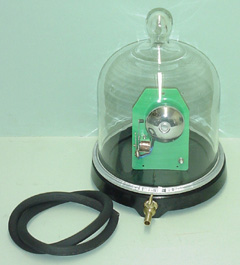
			<content type="html"><![CDATA[<div class="quotebox"><cite>IanJohnson wrote:</cite><blockquote><p>It&#039;s complicated to set up but looks easy to use once it is.&nbsp; It would be cool if there was a stand of some kind for the upper section, and then you can keep several jars on hand.&nbsp; Prep a jar, screw it on, run the pump and then put the next one on.&nbsp; The problem with the mason jars is it limits the size of the print, and getting the prints in and out without dropping them in the acetone is a bit tricky.&nbsp; </p><p>I wonder if you could do this to a pressure cooker, which is wider and able to be sealed.&nbsp; Is the pressure inside still lower than ambient after the acetone evaporates?&nbsp; If so, you don&#039;t need a lid that threads or locks, you might be able to rely on a gasket and air pressure.</p></blockquote></div><p>Point well taken about the size limitations.&nbsp; The size of the main chamber isn&#039;t the main limitation, it&#039;s that the secondary isolation chamber (the one on top with the balloon) has to be at least 2x the volume of the main chamber to reach acetone&#039;s vapor pressure (boiling point) at room temperature.&nbsp; I think bell jars are readily available at large sizes, but they&#039;re really expensive.&nbsp; Alternatively, putting several mason jars in parallel, each with a balloon inside would also probably work for the secondary chamber.&nbsp; The primary chamber can still be a big bell jar, which, though expensive, has the advantage of being really easy to open and close since they typically seal by vacuum to a flat floor pad.&nbsp; Here&#039;s something that looks like it might work really well at $70:</p><p><a href="http://www.sciencelabsupplies.com/Bell_and_Vacuum_Sound_Jar.html?gclid=CKLS4IDnvbYCFSQl4godABkAOA">http://www.sciencelabsupplies.com/Bell_ … 4godABkAOA</a><br /><span class="postimg"><img src="http://www.sciencelabsupplies.com/images/magictoolbox_cache_from_database/f1864d987e94717b5a680c3b3ac16754.jpg" alt="http://www.sciencelabsupplies.com/images/magictoolbox_cache_from_database/f1864d987e94717b5a680c3b3ac16754.jpg" /></span></p><p>When the acetone evaporates, it tries to maintain an equilibrium at acetone&#039;s vapor pressure, so there should still be a vacuum at about .3 atmospheres after evaporation.&nbsp; I didn&#039;t know that a pressure cooker would maintain a seal in a vacuum, but it seems worth a try.&nbsp; The main downside I see is that you won&#039;t be able to see how the part is progressing inside as you can with a mason jar or bell jar.</p>]]></content>
			<author>
				<name><![CDATA[tealvince]]></name>
				<uri>https://www.soliforum.com/user/676/</uri>
			</author>
			<updated>2013-04-09T14:41:00Z</updated>
			<id>https://www.soliforum.com/post/19050/#p19050</id>
		</entry>
		<entry>
			<title type="html"><![CDATA[Re: 3d refiner, smoothing station]]></title>
			<link rel="alternate" href="https://www.soliforum.com/post/19039/#p19039" />
			<content type="html"><![CDATA[<p>How much for a fishtank and some servos !?!?!</p><p>I don&#039;t like the idea of using MEK at home, I used to deal with it 20 years ago at a inkjet printers. and it would strip your sinuses out if you got to near it. All the rooms had to be heavily ventilated.</p>]]></content>
			<author>
				<name><![CDATA[Zarni]]></name>
				<uri>https://www.soliforum.com/user/41/</uri>
			</author>
			<updated>2013-04-09T12:19:42Z</updated>
			<id>https://www.soliforum.com/post/19039/#p19039</id>
		</entry>
		<entry>
			<title type="html"><![CDATA[Re: 3d refiner, smoothing station]]></title>
			<link rel="alternate" href="https://www.soliforum.com/post/19023/#p19023" />
			<content type="html"><![CDATA[<p>I just wanted to say that I always wanted to smooth PLA.<br />And I always wanted a non-glossy finish.</p><p>Have any had any DIY-solution for this? </p><p>-ABS-<br />In previous posts I mentioned diluted acetone, and I tried that.<br />My tests showed that the smoothing-effect reduces dramatically when diluting in water.<br />(I tried 80 / 20 - Acetone / Water) &lt; Worked though, but really slow</p><p>-PLA-<br />I also tried smoothing PLA using caustic soda (flakes) in hot water, no success.<br />Using high concentration, and no smoothing effect after a full day?</p>]]></content>
			<author>
				<name><![CDATA[Kvirre]]></name>
				<uri>https://www.soliforum.com/user/207/</uri>
			</author>
			<updated>2013-04-09T07:07:10Z</updated>
			<id>https://www.soliforum.com/post/19023/#p19023</id>
		</entry>
		<entry>
			<title type="html"><![CDATA[Re: 3d refiner, smoothing station]]></title>
			<link rel="alternate" href="https://www.soliforum.com/post/18988/#p18988" />
			<content type="html"><![CDATA[<div class="quotebox"><cite>IanJohnson wrote:</cite><blockquote><p>The problems this machine is trying solve with the uneven application of liquid solvent is the reason I went to vapor.&nbsp; &nbsp;I would like to know more about their claim to smooth PLA however, everyone who knows how to do it says it is not a solvent you want to handle at home.</p></blockquote></div><p>Well, I don&#039;t know if the &quot;Industrial Maintenance Coating Thinner&quot; that they link works, but from the MSDS info, it shouldn&#039;t be more dangerous than Acetone, they have the same classifications.</p>]]></content>
			<author>
				<name><![CDATA[atelles]]></name>
				<uri>https://www.soliforum.com/user/630/</uri>
			</author>
			<updated>2013-04-08T21:49:59Z</updated>
			<id>https://www.soliforum.com/post/18988/#p18988</id>
		</entry>
		<entry>
			<title type="html"><![CDATA[Re: 3d refiner, smoothing station]]></title>
			<link rel="alternate" href="https://www.soliforum.com/post/18386/#p18386" />
			<content type="html"><![CDATA[<p>It&#039;s complicated to set up but looks easy to use once it is.&nbsp; It would be cool if there was a stand of some kind for the upper section, and then you can keep several jars on hand.&nbsp; Prep a jar, screw it on, run the pump and then put the next one on.&nbsp; The problem with the mason jars is it limits the size of the print, and getting the prints in and out without dropping them in the acetone is a bit tricky.&nbsp; </p><p>I wonder if you could do this to a pressure cooker, which is wider and able to be sealed.&nbsp; Is the pressure inside still lower than ambient after the acetone evaporates?&nbsp; If so, you don&#039;t need a lid that threads or locks, you might be able to rely on a gasket and air pressure.</p>]]></content>
			<author>
				<name><![CDATA[IanJohnson]]></name>
				<uri>https://www.soliforum.com/user/14/</uri>
			</author>
			<updated>2013-04-02T21:03:35Z</updated>
			<id>https://www.soliforum.com/post/18386/#p18386</id>
		</entry>
		<entry>
			<title type="html"><![CDATA[Re: 3d refiner, smoothing station]]></title>
			<link rel="alternate" href="https://www.soliforum.com/post/18375/#p18375" />
			<content type="html"><![CDATA[<div class="quotebox"><cite>IanJohnson wrote:</cite><blockquote><p>The problems this machine is trying solve with the uneven application of liquid solvent is the reason I went to vapor.&nbsp; &nbsp;I would like to know more about their claim to smooth PLA however, everyone who knows how to do it says it is not a solvent you want to handle at home.</p></blockquote></div><p>Interesting.&nbsp; A couple of people have brought up using diluted solvent before, but I haven&#039;t seen anybody up to this point actually trying it before this, so it&#039;s nice to see alternative approaches.&nbsp; Ian, I agree that I&#039;m not sure if this has a lot of advantages over using the standard vapor approaches, as you still have an open tank of solvent (albeit diluted), but now it&#039;s much larger and harder to move, and not even a condenser to keep the fumes contained.&nbsp; Seems a bit expensive and scary to me (spill-risk?!).&nbsp; These limitations would unfortunately prevent me from using something like this, but maybe it has some ideas worth adapting.</p><p>PS:&nbsp; Ian, I got a v1.0 my own small vacuum-driven smoothing station working this weekend; so I&#039;m curious to have your input about the alternative vapor approach I used:</p><p><a href="http://www.soliforum.com/topic/1627/sealed-smoothing-station-success/page/2/">http://www.soliforum.com/topic/1627/sea … ss/page/2/</a></p>]]></content>
			<author>
				<name><![CDATA[tealvince]]></name>
				<uri>https://www.soliforum.com/user/676/</uri>
			</author>
			<updated>2013-04-02T19:11:06Z</updated>
			<id>https://www.soliforum.com/post/18375/#p18375</id>
		</entry>
		<entry>
			<title type="html"><![CDATA[Re: 3d refiner, smoothing station]]></title>
			<link rel="alternate" href="https://www.soliforum.com/post/18372/#p18372" />
			<content type="html"><![CDATA[<p>They just asked to trade a 3d refiner for a filastruder...</p>]]></content>
			<author>
				<name><![CDATA[elmoret]]></name>
				<uri>https://www.soliforum.com/user/221/</uri>
			</author>
			<updated>2013-04-02T18:37:25Z</updated>
			<id>https://www.soliforum.com/post/18372/#p18372</id>
		</entry>
		<entry>
			<title type="html"><![CDATA[Re: 3d refiner, smoothing station]]></title>
			<link rel="alternate" href="https://www.soliforum.com/post/18368/#p18368" />
			<content type="html"><![CDATA[<p>And when your not using it you can use it as a fish tank.</p>]]></content>
			<author>
				<name><![CDATA[Michael]]></name>
				<uri>https://www.soliforum.com/user/3/</uri>
			</author>
			<updated>2013-04-02T18:21:45Z</updated>
			<id>https://www.soliforum.com/post/18368/#p18368</id>
		</entry>
		<entry>
			<title type="html"><![CDATA[Re: 3d refiner, smoothing station]]></title>
			<link rel="alternate" href="https://www.soliforum.com/post/18358/#p18358" />
			<content type="html"><![CDATA[<p>I wonder if those servos are explosion rated...</p>]]></content>
			<author>
				<name><![CDATA[elmoret]]></name>
				<uri>https://www.soliforum.com/user/221/</uri>
			</author>
			<updated>2013-04-02T17:26:17Z</updated>
			<id>https://www.soliforum.com/post/18358/#p18358</id>
		</entry>
		<entry>
			<title type="html"><![CDATA[Re: 3d refiner, smoothing station]]></title>
			<link rel="alternate" href="https://www.soliforum.com/post/18357/#p18357" />
			<content type="html"><![CDATA[<p>Just got this from them:</p><div class="quotebox"><blockquote><p>Tim,</p><p>We are using different &quot;solvents&quot; for ABS and PLA, we are still running more testing and will be posting results up on <a href="http://www.3dprintsexpress.com">www.3dprintsexpress.com</a>. We are also considering testing Nylon.</p><p>Currently:</p><p>For ABS printed parts we are using &quot;Klean Strip&quot; brand acetone sold in California as &quot;industrial solvent.&quot;</p><p>For PLA printed parts we are using &quot;Klean Strip&quot; brand MEK equivalent sold in California as &quot;lacquer thinner.&quot;</p><p><a href="http://www.wmbarr.com/kleanstrip/default.aspx">http://www.wmbarr.com/kleanstrip/default.aspx</a></p><p>Congrats on your awesome Kickstarter campaign for the filastruder, you should be very proud, great job! I am considering buying one for my 3D printing.</p><p>Cheers,</p><p>David &amp; Ross</p></blockquote></div>]]></content>
			<author>
				<name><![CDATA[elmoret]]></name>
				<uri>https://www.soliforum.com/user/221/</uri>
			</author>
			<updated>2013-04-02T17:24:22Z</updated>
			<id>https://www.soliforum.com/post/18357/#p18357</id>
		</entry>
		<entry>
			<title type="html"><![CDATA[Re: 3d refiner, smoothing station]]></title>
			<link rel="alternate" href="https://www.soliforum.com/post/18347/#p18347" />
			<content type="html"><![CDATA[<p>The problems this machine is trying solve with the uneven application of liquid solvent is the reason I went to vapor.&nbsp; &nbsp;I would like to know more about their claim to smooth PLA however, everyone who knows how to do it says it is not a solvent you want to handle at home.</p>]]></content>
			<author>
				<name><![CDATA[IanJohnson]]></name>
				<uri>https://www.soliforum.com/user/14/</uri>
			</author>
			<updated>2013-04-02T16:08:51Z</updated>
			<id>https://www.soliforum.com/post/18347/#p18347</id>
		</entry>
		<entry>
			<title type="html"><![CDATA[Re: 3d refiner, smoothing station]]></title>
			<link rel="alternate" href="https://www.soliforum.com/post/18335/#p18335" />
			<content type="html"><![CDATA[<p>Pretty interesting.</p><p>Things to note:<br />-Max object size: 6.5&quot; W x 6.5&quot; L x 8<br />-Works on ABS and PLA (????)<br />-Smoothed part does not look shiny<br />-Using some sort of solvent/stripper by <a href="http://www.wmbarr.com/kleanstrip/default.aspx">Klean-Strip</a><br />&nbsp; -Possibly 2:1 ratio of klean-strip with water</p><p>I wonder how important important the role of the pump is.&nbsp; I would hypothesis that putting a propeller on the shaft above the print platform would assist with solvent agitation while not requiring a submerged electrical device.&nbsp; If so, we are talking about a drill in a bucket.&nbsp; I would think that this could be recreated for way below the $270 early adopter KS.</p>]]></content>
			<author>
				<name><![CDATA[nickythegreek]]></name>
				<uri>https://www.soliforum.com/user/366/</uri>
			</author>
			<updated>2013-04-02T13:55:49Z</updated>
			<id>https://www.soliforum.com/post/18335/#p18335</id>
		</entry>
</feed>
